
PMI XRF ANALYSIS
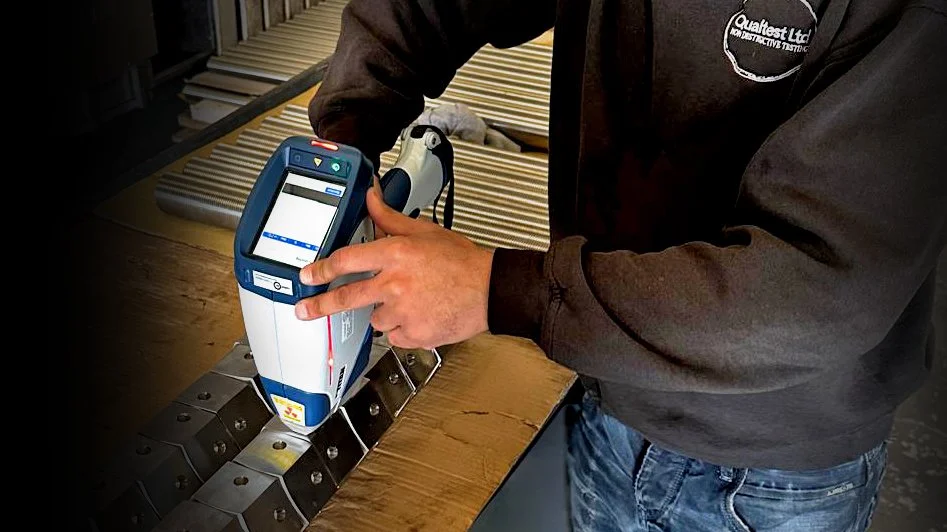
Positive Material Identification (PMI) XRF Analysis allows us to accurately record the chemical composition of materials.
OVERVIEW
What is Positive Material Identification?
Positive Material Identification using XRF is a non-destructive testing (NDT) method used to find out what metals an object is made from.
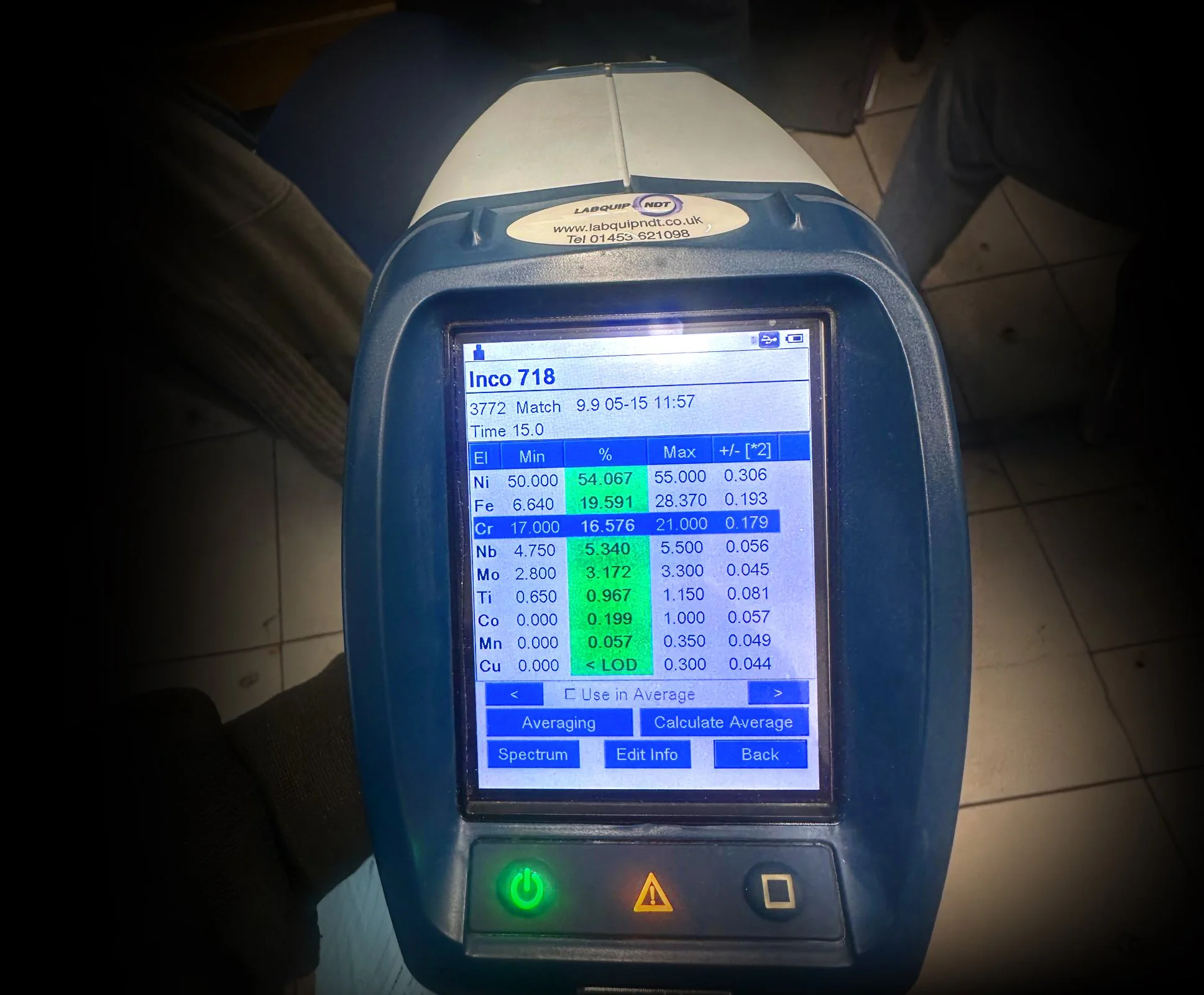
The XRF analyser directs a small amount of X-ray energy onto the surface of the metal, causing the atoms within the material to respond by emitting their own characteristic X-rays. The analyser detects and measures these X-rays, with different elements producing unique X-ray signatures. By analysing these signatures, the instrument can identify which elements are present in the material and determine its chemical composition.
HOW IT WORKS
The Process

APPLICATIONS
Where is PMI XRF used?
Oil and gas
Petrochemical plants
Power generation
Chemical processing
Aerospace
Automotive
Construction and structural engineering
Pharmaceutical manufacturing
Fabrication and welding
Nuclear industry
MATERIALS
Suitable Materials
PMI Inspection can be used on the following materials including:
Iron (Fe)
Chromium (Cr)
Nickel (Ni)
Molybdenum (Mo)
Manganese (Mn)
Copper (Cu)
Titanium (Ti)
Cobalt (Co)
EQUIPMENT
Inspection Equipment
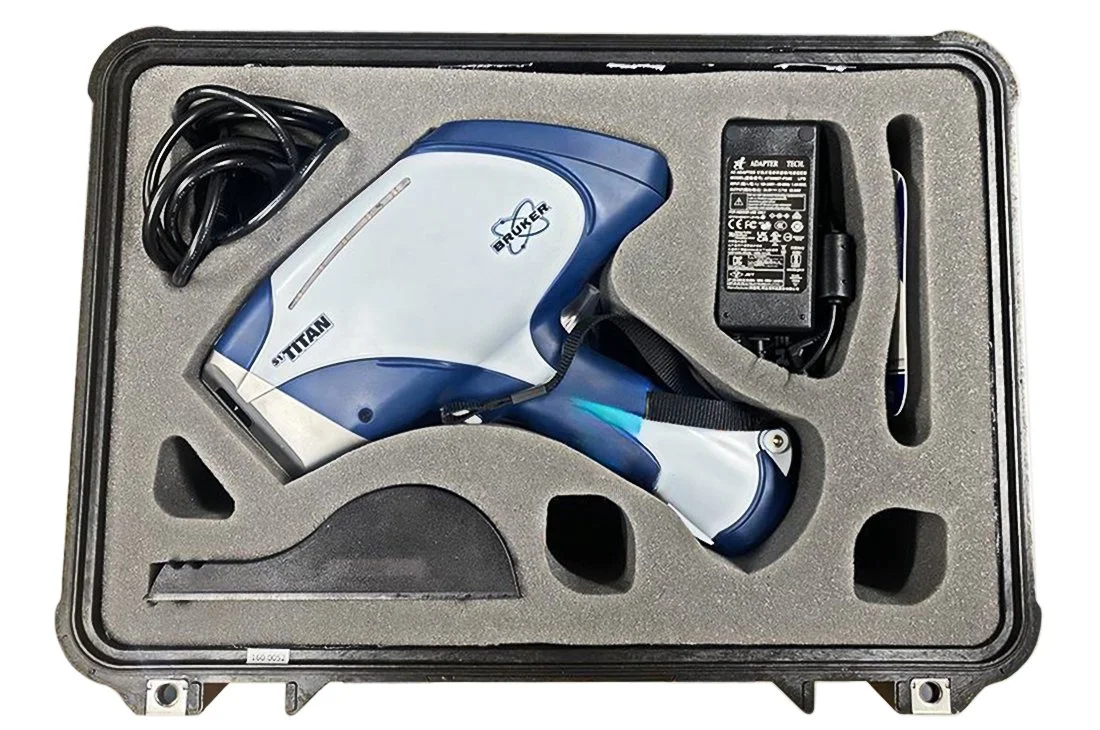
A PMI XRF kit normally consists of a handheld device similar to the one below.